Packing Basics for the First-Time Traveler
Do you remember that mixture of excitement and nerves when planning your first trip? These are unforgettable moments; you are about to explore a new world and different cultures. However, amidst this excitement, a small obstacle arises that can cause some anxiety: How do I pack my bags? What items will I actually need? And what can I do without? As a first-time traveler, it is natural to fall into the trap of "packing too much for any emergency," which often leads to heavy luggage that hinders your movement and costs you extra fees at the airport. In this comprehensive guide, we will walk you through the art and basics of packing so you can set off on your journey with lightness and confidence.
Why is smart packing one of the most important travel basics?
Packing is not just about putting clothes in a box; it is a strategy that determines your comfort throughout the trip. Imagine having to drag a 30kg suitcase over cobblestone streets in Europe, or discovering upon reaching your tropical destination that you forgot your sunscreen while having brought 4 winter coats! Good organization saves your time, reduces stress, and protects you from paying overweight fees that can exceed $50 per kilo on some airlines.
Avoid the "Maybe I'll Need This" Trap
The biggest mistake any first-time traveler makes is saying, "Maybe I'll need this." Believe me, if you don't use the item in your daily life, you won't use it while traveling. The golden rule here is: bring what you know you will use, and if you need something else in an emergency, you can always buy it at your destination.
How do you choose the right bag for your first trip?
Choosing the bag itself is just as important as what you put inside it. The ideal type of bag depends on your destination and the nature of your trip:
- Hard-shell Spinner: An excellent choice for travelers heading to modern cities who will primarily move through airports via taxis to hotels. It features 4 wheels that rotate 360 degrees, making it easy to pull beside you without straining your back or arms, and it protects fragile items.
- Travel Backpack: If your trip involves lots of train travel, climbing stairs in old European hotels, or heading to natural destinations like Southeast Asia, a 40 to 50-liter backpack is best. It gives you full freedom of movement and keeps your hands free.
- Duffel Bag: Suitable for short trips and weekend getaways, or for trips that require luggage to be placed in tight spaces like a car trunk.
When buying your first bag, invest in a reliable brand with strong zippers and durable wheels, as the worst nightmare a traveler might face is a broken zipper or wheel in the middle of the trip.
The Comprehensive List: What to pack as a first-time traveler?
To make the task easier, we have divided travel basics into main categories. You can use this list as a reference before closing your suitcase.
1. Documents and Paperwork (The most important part)
You cannot travel without these items, and they should always be in your carry-on bag that accompanies you in the cabin:
- Valid passport (valid for at least 6 months).
- Entry visa, if your destination requires one.
- Flight tickets and hotel booking confirmations (preferably printed, with a digital copy saved on your phone).
- Credit cards and some cash in the currency of the host country (about $100-$200 for emergencies).
- Travel insurance that covers medical emergencies and flight cancellations.
2. Smart and Practical Clothing
As a first-time traveler, we recommend following the "5-4-3-2-1 rule" for a one-week trip, which is as follows:
- 5 tops (shirts or t-shirts).
- 4 bottoms (trousers or skirts).
- 3 accessories or extra items (such as a light jacket, scarf, or swimwear).
- 2 pairs of shoes (one very comfortable walking shoe and one formal shoe or sandal).
- 1 small daypack for exploring.
Choose neutral colors (black, white, navy, beige) to make it easier to mix and match pieces to get different outfits without needing more clothes.
3. Personal Care and Medication
Do not carry large family-sized bottles of shampoo or soap. Use small travel bottles (less than 100ml) to comply with airline regulations. Your toiletry bag should include:
- A small toothbrush and toothpaste.
- Deodorant, sunscreen, and lip balm.
- A mini first-aid kit (painkillers like paracetamol, allergy medication, bandages, and stomach upset remedies).
- If you take prescription medication, bring enough for your trip with the doctor's prescription in English.
4. Essential Electronics
In our current era, the smartphone is your tour guide, camera, and map. Do not forget:
- Phone charger and original cables.
- Universal adapter, as electricity plugs vary from one country to another.
- Power bank with a 10,000 mAh capacity to ensure your battery doesn't die while exploring cities.
Strategies and Techniques for Packing Like a Pro
Now that we have gathered everything, how do we put it in the bag efficiently?
The Roll Instead of Fold Method
Travel experts agree that "rolling" clothes into cylinders instead of traditional folding saves massive space and significantly reduces fabric wrinkles. Start with heavy clothes at the bottom of the bag, then place the rolled light clothes in the gaps.
Using Packing Cubes
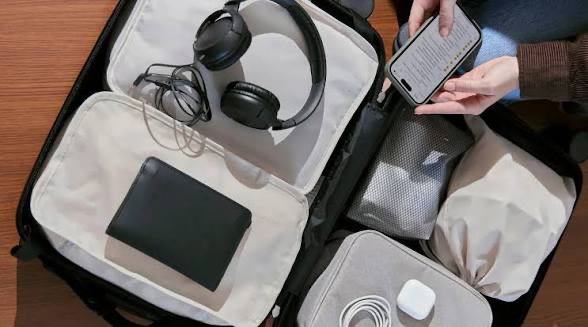
These fabric cubes are the secret to organization. You can assign a cube for shirts, a cube for trousers, and another for underwear. When you reach your hotel, you won't have to rummage through the entire bag looking for your socks; you will simply pull out the designated cube.
Utilizing Dead Spaces
Have you noticed the space inside your shoes? You can place socks or fragile glass containers (after wrapping them in a plastic bag) inside shoes to protect them and save space at the same time.
What should you leave at home?
To avoid excess weight, leave these items in your room closet:
- Hair dryer and iron: They take up a lot of space and weight, and most hotels provide them.
- Valuable jewelry: Do not expose yourself to the risk of loss or theft; stick to simple accessories.
- Heavy books: Replace them with an e-reader or audiobooks.
- Uncomfortable shoes: One pair of shoes causing blisters is enough to ruin your trip.
Golden Tips Before Closing the Bag
1. Check the airline's baggage policy: Allowed weights vary (usually 23kg for checked luggage and 7kg for carry-on).
2. Use a portable luggage scale: Buy a small manual scale to weigh your bag at home or at the hotel before heading to the airport to avoid fines.
3. Identify your bag: At the baggage claim area, bags look alike. Tie a colored ribbon or use a distinct bag cover to identify it immediately.
4. Prepare an emergency bag in the airplane cabin: Put one change of clothes and your most important personal items in your carry-on, in case of any delay in the arrival of your large bag.
Conclusion
Mastering the basics of packing for the first-time traveler is your first skill toward a fun and hassle-free travel experience. Travel is about freedom and exploration, and a heavy bag is the first shackle you must get rid of. Always remember that you are traveling to collect memories and explore the world, not to show off your wardrobe! Start preparing your list now, apply smart organization strategies, and book your next ticket with total confidence. The world is waiting for you, and your amazing journey begins with a smartly organized bag. Happy travels!